Featured
Table of Contents
That maximizes money in the short-term, and you might have 3 to four years to save toward the negotiation quantity. Really harmful to credit rating, largely as a result of missed repayments and an unfavorable "resolved" mark that might remain on your credit rating report for up to 7 yearsMay be just option if other alternatives (debt loan consolidation, equilibrium transfer charge card, financial obligation mercy) aren't possibleTypically requires a fee to the 3rd party, which can counter some or all of the financial savings from debt settlementMay help you stay clear of bankruptcy if you have actually missed out on a number of paymentsNot all lenders function with financial debt negotiation firms Financial obligation mercy may be right for you if you are experiencing a financial challenge that makes it nearly difficult to pay for your financial debt equilibriums.
With a DMP, you make one month-to-month settlement to the credit rating counseling agency. Those funds are then distributed to financial institutions of your unprotected financial debts, such as bank card and installment car loans. The agency works with your financial institutions to reduce rates of interest or waive charges, yet some lenders may refuse such giving ins.
A financial obligation consolidation loan combines your eligible debts right into one brand-new financing. It can help you pay for financial debt if you have the ability to secure a lending rate that's less than the average price of the accounts you're consolidating. You must abstain from racking up financial obligation on those recently cleared accounts or your financial obligation might grow even greater.
That provides you lots of time to eliminate or considerably reduce your balance while making interest-free payments.
Not known Factual Statements About How Top Providers Apart in Alternative Debt Relief Companies
You may require it if your creditor or a collection company ever tries to gather on the financial obligation in the future. The letter can show you do not owe what the collection firm's records show. Yes, in many cases, the internal revenue service considers forgiven financial obligation as gross income. When a lender forgives $600 or even more, they are called for to send you Type 1099-C.
Financial obligation forgiveness or settlement practically always injures your credit rating. Anytime you clear up a financial debt for less than you owe, it may look like "resolved" on your credit score report and impact your debt score for seven years from the day of negotiation. Your credit report can also drop substantially in the months resulting in the mercy if you drop behind on repayments.
All about Understanding Different Debt Forgiveness Offered Now
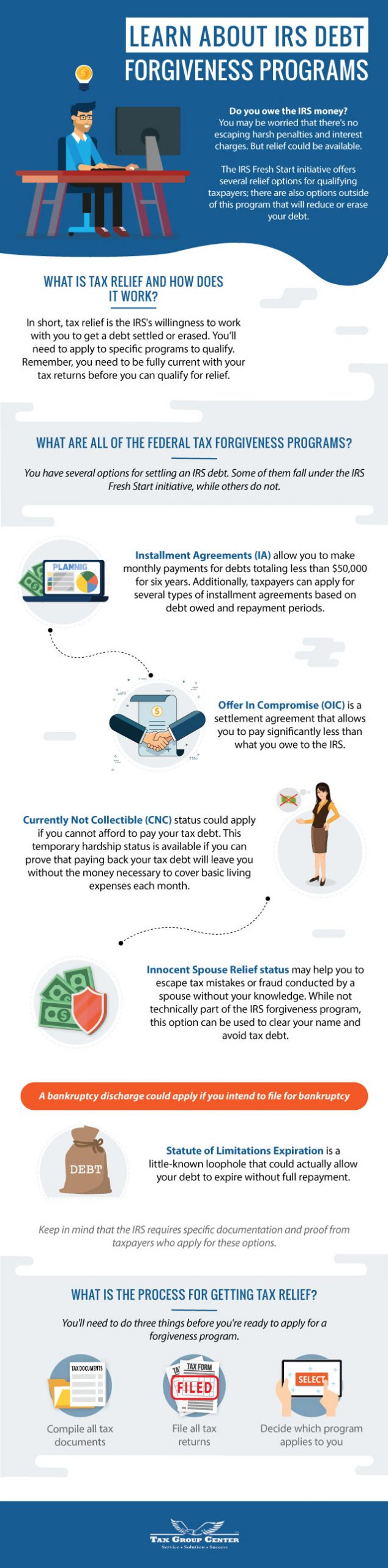
Tax financial obligation compromise programs Tax obligation financial obligation happens when the amount of tax obligations you owe surpasses what you have actually paid. This scenario usually results from underreporting earnings, not filing returns in a timely manner, or discrepancies found throughout an IRS audit. The repercussions of gathering tax obligation financial debt are severe and can include tax obligation liens, which give the IRS a lawful insurance claim to your building as safety and security for the debt.
Greater rate of interest rates on offered debt. Incomes and Bank Accounts internal revenue service can impose (seize) earnings and bank accounts to please the financial obligation. Reduced earnings and interruption of important financial procedures. Residential or commercial property Seizure In extreme situations, the internal revenue service can confiscate and offer residential property to cover the financial debt. Loss of important possessions and prospective variation.
Social Stigma Facing legal action from the Internal revenue service can bring social preconception. Work Opportunities An inadequate debt score due to tire debt can restrict employment possibilities. Government Advantages Tax financial debt might impact qualification for government benefits, such as Social Security and Medicaid.
Top Guidelines Of Documents to Gather for How to Use Credit Cards Wisely to Avoid Debt : APFSC
The OIC considers numerous aspects, consisting of the taxpayer's revenue, expenses, property equity, and capacity to pay. Efficiently discussing an OIC can be complex, needing a thorough understanding of the internal revenue service's standards and a solid disagreement for why your offer lines up with your capability to pay. It is necessary to note that not all applications are approved, and the process requires in-depth economic disclosure.
The internal revenue service analyzes your total economic circumstance, including your income, costs, possession equity, and capacity to pay. You must additionally be present with all declaring and payment demands and not be in an open personal bankruptcy case. The internal revenue service also considers your conformity history, assessing whether you have a record of prompt declaring and paying taxes in previous years.
The Greatest Guide To How to Not Fall Into Future Debt Traps After Debt Relief
The application procedure for an Offer in Concession includes a number of in-depth steps. Initially, you have to complete and send internal revenue service Kind 656, the Offer in Concession application, and Kind 433-A (OIC), a collection details statement for individuals. These types require extensive monetary information, consisting of details concerning your income, debts, expenses, and assets.
Back tax obligations, which are unpaid taxes from previous years, can substantially enhance your total internal revenue service financial obligation if not dealt with promptly. This financial debt can build up rate of interest and late payment penalties, making the original quantity owed a lot larger in time. Failing to repay tax obligations can cause the internal revenue service taking enforcement actions, such as releasing a tax obligation lien or levy against your residential or commercial property.
It is essential to resolve back tax obligations asap, either by paying the total owed or by preparing a layaway plan with the internal revenue service. By taking proactive steps, you can avoid the buildup of extra passion and charges, and stop more hostile collection actions by the internal revenue service.
One typical factor is the idea that the taxpayer can pay the sum total either as a round figure or with a repayment strategy. The IRS additionally thinks about the taxpayer's revenue, expenses, property equity, and future earning capacity. If these variables show that the taxpayer can afford to pay greater than the supplied quantity, the internal revenue service is likely to turn down the offer.
Rumored Buzz on What the Law Says Under Bankruptcy Law
It is critical to provide accurate and total information in your application and to seek advice from a tax professional to improve the possibilities of acceptance. Dealing with IRS financial debt can be complex and difficult. Tax specialists, such as CPAs, tax obligation lawyers, or registered agents, can supply invaluable aid. They have the proficiency to navigate the details of tax obligation legislation and IRS procedures.

Table of Contents
Latest Posts
Creating Post-Bankruptcy Spending Strategy That Works Fundamentals Explained
An Unbiased View of Methods Best Budgeting Apps & Debt Payoff Tools Guarantees Legal Compliance
Compliance Considerations Regarding Debt Forgiveness Fundamentals Explained
More
Latest Posts
Creating Post-Bankruptcy Spending Strategy That Works Fundamentals Explained
An Unbiased View of Methods Best Budgeting Apps & Debt Payoff Tools Guarantees Legal Compliance
Compliance Considerations Regarding Debt Forgiveness Fundamentals Explained